Books and Research
Books, Research, and a Lifetime of Curiosity
Following the questions wherever they lead
I’ve been writing and conducting research for more than three decades, and apparently I have never been particularly good at staying in one intellectual lane. My earliest research explored communication and intimacy in adults raised in alcoholic families. Years later, my doctoral research took me into the effects of extended water fasting on depression. My books have wandered through fasting, healing, psychology, humor, human potential, and now into the gloriously combustible territory of men, love, worship, sexuality, and the sacred.
On the surface, some of those subjects may appear to have very little to say to one another. To me, they have always been connected by the same fascination with human beings: what shapes us, what changes us, what we are capable of enduring, what helps us heal, and what allows us to become more fully alive.
I have always been willing to follow an interesting question farther than might be considered entirely reasonable. Sometimes that has resulted in research. Sometimes it has become a book. And occasionally it has resulted in an elegant grenade being placed under a perfectly respectable cultural table.
Below are some of the books and research that have resulted so far. Apparently, I’m still asking questions.
Books
BOOK: Fredricks, Randi. (2008). Healing & Wholeness: Complementary and Alternative Therapies for Mental Health. Bloomington, IN: Author House.
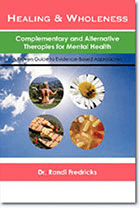
Healing and Wholeness: Complementary and Alternative Therapies for Mental Health provides a comprehensive overview of complementary and alternative treatments for mental health, with information and research on their effectiveness for treating specific disorders. Twenty-two chapters and more than 650 pages document research and the current practice of using complementary and alternative therapies in treating a number of disorders, including depression, anxiety, ADHD, autism, and addictions. This book is used as a textbook for medical and mental health professionals throughout the world.
The therapies covered are both state-of-the-art and ancient, including naturopathy, psychotherapy, hypnotherapy, nutritional therapy, herbal medicine, meditation, and others. Each chapter begins with a description and classification of the disorder, followed by discussions of scientific research on diet, nutritional therapy, herbal medicine, complementary and alternative therapies, psychotherapy, and lifestyle changes.
This extensive compendium of integrative and holistic therapies gives readers access to a multitude of options for improving mental health and well-being. By bringing together a large body of research and therapeutic approaches in one volume, Healing and Wholeness offers a thorough guide to alternative and complementary therapies in the mental health field, organizing a substantial amount of information in a relevant, accessible, and easy-to-use format. It can be used as a reference for medical and mental health professionals, students, researchers, and anyone interested in exploring integrative approaches to psychological health and healing.
Click here to purchase at Amazon
BOOK: Fredricks, R. (2012). Fasting: An Exceptional Human Experience. Bloomington, IN: Author House.
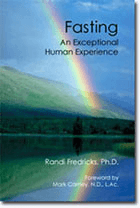 Fasting: An Exceptional Human Experience explores the history, science, and psychological and spiritual impacts of fasting through its twenty-two chapters and 500 pages.
Since prehistory, fasting has been used in various ways as a means of transformation. As a spiritual practice, it is the oldest and most common form of asceticism and is found in virtually every religion and spiritual tradition. In psychology, studies have suggested that fasting can alleviate the symptoms of some psychiatric conditions, including depression and schizophrenia. In medicine, fasting is one of the most promising therapies, with research suggesting that fasting can cause certain drugs, such as chemotherapy, to work better while reducing drug side-effects. Hunger striking, sometimes called political fasting, may be the most powerful application of fasting. Proof of this occurred in 1948, when Gandhi’s hunger strike caused millions of Hindus and Muslims in India to cease their fighting.
Dr. Fredricks discusses the relationship between fasting and transpersonal psychology, with a focus on peak experiences, self-realization, and other exceptional human experiences, demonstrating how fasting can be profoundly therapeutic, create global paradigm shifts, and provide personal mystical phenomena.
Click here to purchase at Amazon
BOOK: Fredricks, Randi. (2020). Complementary and Alternative Treatments for Anxiety. Bloomington, IN: Author House.
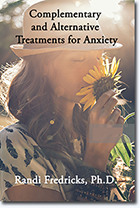
Anxiety is one of the most common mental health problems in the United States, affecting millions of people every year. Yet it is also one of the most untreated. Conventional treatment, which typically involves medication, often has limited results and can produce serious side effects, causing people with anxiety to seek alternatives. Fortunately, there is a growing body of evidence that complementary and alternative therapies can relieve the symptoms of anxiety without unpleasant side effects, including for some people with treatment-resistant anxiety disorders.
In Complementary and Alternative Treatments for Anxiety, Dr. Fredricks discusses recent research and medical findings on the effectiveness of complementary and alternative mental health care practices used in the management of anxiety disorders. This concise, easy-to-read guide explores a variety of approaches, from nutritional changes and herbal medicine to other natural and integrative therapies, many of which have been used for thousands of years in the treatment of anxiety.
The book details research protocols and findings while providing practical information that can help anxiety sufferers understand the alternatives available to them. Studies have shown that increasing numbers of people are discovering complementary and alternative therapies and their potential anxiety-reducing effects. By bringing this research together in an accessible format, Dr. Fredricks provides insights into drug-free approaches for reducing anxiety and managing stress.
Complementary and Alternative Treatments for Anxiety serves as a guide for those seeking additional ways to understand and manage anxiety, offering information and resources designed to help readers feel better, become less stressed, and move toward an anxiety-free life.
Click here to purchase at Amazon
BOOK: Fredricks, Randi. (2020). Complementary and Alternative Treatments for Depression. Bloomington, IN: Author House.
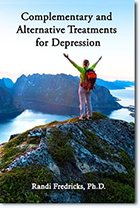
Over the past several decades, depression rates have skyrocketed, with millions of Americans suffering from a depressive disorder at some point in their lifetime. While some depression sufferers find relief with antidepressants and other conventional approaches, these treatments do not work for everyone and can cause unwanted side effects. Fortunately, there are complementary and alternative methods available, some of which may help even those with treatment-resistant depression.
In Complementary and Alternative Treatments for Depression, Dr. Fredricks provides a comprehensive guide to complementary and alternative therapies for depression, drawing upon research and medical findings on their effectiveness. As increasing amounts of research examine drug-free treatments for depression, scientists are discovering the potential of these methods to reduce depressive symptoms and improve psychological well-being.
The book explores a wide range of approaches, from nutritional and mind-body interventions to herbal medicine and psychedelic substances. Some of these therapies have been used for thousands of years, while others represent newer developments in the understanding and treatment of depression. Dr. Fredricks outlines the research and protocols behind these approaches and examines how they can be incorporated into a more holistic understanding of mental health.
When combined with holistic psychotherapy, complementary and alternative methods can help people develop effective ways of recovering from depression while improving their lives. Complementary and Alternative Treatments for Depression provides readers with information and resources for exploring alternatives to conventional treatment, reducing depressive symptoms, and discovering new possibilities for healing. It is a book that can change the way readers understand depression, treatment, and their own lives.
Click here to purchase at Amazon
Published Research
RESEARCH STUDY/JOURNAL ARTICLE: Fredricks, Randi. (2011). An exploratory study of the effects of water fasting for depression (Doctoral dissertation). ProQuest database. (UMI No. 3453555)
Abstract
This mixed methods study including both quantitative and qualitative data explored the use of water fasting to decrease symptoms of depression. The study included 500 participants, 250 of whom water-fasted for 14 days, consuming no food during the fasting period. Water fasting was defined as abstinence from all food and drink except water for a specific length of time.
Transpersonal scholars have suggested that fasting can be a means of personal transformation, providing exceptional human experiences and leading to peak experiences and self-actualization. The degree of depression was measured by the Beck Depression Inventory (BDI-II).
The research question was: Do individuals who engage in water fasting demonstrate a decrease in the symptoms of depression? Using a mixed methods design, 42 fasting participants were matched to 42 comparison participants at testing time one for gender and level of depression according to the four BDI-II scoring categories of minimal, mild, moderate, and severe depression. The researcher found a statistically significant difference between the groups.
RESEARCH STUDY/JOURNAL ARTICLE: Fredricks, Randi et al. (1993). Communication apprehension among adult children of alcoholics (Baccalaureate thesis). Eric database. (ED No. 364923)
Abstract
The relationship between children and their alcoholic parents has a profound impact on communication patterns.
Noting that children of alcoholic parents come from home settings similar to those identified as potential sources of communication apprehension, a study compared communication apprehension scores of adult children of alcoholics (ACoA) with those of non-ACoAs.
Subjects, 85 men and 109 women, were drawn from a local church, undergraduate and graduate classes at a northern California university, and northern California Al-Anon ACoA meetings. They ranged from 18 to 60 years of age, with a wide range of educational backgrounds. Each subject completed a questionnaire that consisted of two instruments: the Children of Alcoholics Screening Test (CAST) and McCroskey’s Personal Report of Communication Apprehension Test (PRCA-24).
Results indicated a strong relationship between ACoAs and CA except where subjects were involved in a group communication situation.
Presented at the Annual Meeting of the Speech Communication Association (79th, Miami Beach, FL, November 18-21, 1993).
Song Recommendation:
— “Song 2,” Blur, 1997