Go raise a little hell…and a whole lot of love.
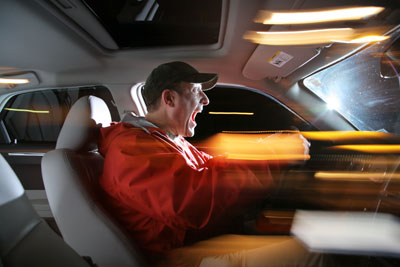 A Word from the Instructor
Welcome, recruit.
You’ve made it this far, which means one of two things: Either you’re a glutton for punishment, or you’ve finally realized that it’s time to step forward and claim your own pair of velvety steel balls and the Hot and Holy Love™ and goes with them.
What if the secret to feeling magnificent was simply doing something magnificent? I don’t mean the kind of magnificent that gets you a blue ribbon at the county fair. I mean the kind of magnificent that makes that certain someone look at you at say, “ ‘Damn. This person is the whole package.”
This manual is not for the faint of heart. Of course, you probably already know that if you’ve read The Velvety Steel Balls Radiance Project™ (or something like it).
This kind of training is not for the people who are content to float through life like a half-inflated pool toy. This is for the ones who are ready to become the kind of person whose mere presence makes others feel like they’ve just been handed the keys to the kingdom.
And yes, it’s going to be uncomfortable. No, you don’t get to negotiate.
You’re here because you want to be worthy—and not in a pansy-ass kind of way. You’re here because you want to become the kind of person who naturally gives and receives great love. The kind of person whose presence changes a room. The kind of person who causes the universe to reveal where all the great orgasms are hidden.
So buckle up. Or, more accurately, roll down your window.
The Exercise
There is one exercise.
Roll down your window.
Pull up next to someone in a car at a stoplight.
Motion for them to roll down their window.
Look them in the eye. Smile. Say:
“Have a beautiful life!”
Then continue driving.
That’s it.
No, really. That’s the exercise.
You’re going to spend the next 5,000 words waiting for Exercise #2. It’s not coming. This is the only one. The rest of this manual is just me, the instructor, staring into your soul while you squirm and try to figure out if I’m serious.
News flash: I am.
Why Only One Exercise
I can already hear you. You’re the kind of person who wants the seven-step system, the beginner-intermediate-advanced pathway, and a certificate of completion proving you are now officially enlightened.. I understand. I have two doctorates and certifications in everything from tattoo removal to full-body orgasms, and I still need reminding, regularly, that a real spiritual practice has to be simple enough to perform at seventy miles an hour with a Diet Coke in one hand.
Here’s the part nobody wants to hear: you do not need a second exercise. You need to do the first one.
Most of us are not undertrained. We are underpracticed. We have read four hundred books about vulnerability and performed none of it in a grocery store checkout line. We are, spiritually speaking, extremely well-read and almost completely out of shape.
This manual doesn’t care how much you know. It cares whether you rolled down the window and completed the exercise. That is the entire test. Not whether you understand metaphysics or complicated blowjob jokes, but whether you pulled up next to an actual human soul and, out loud, with your whole chest, said, “Have a beautiful life!” This, buttercup, is your day in the barrel.
You will notice, by the way, that I have not told you what to say if it doesn’t go well, what to do if you feel silly, or what the “backup plan” is. There isn’t one. A backup plan is just permission to quit dressed up in a windbreaker and penny loafers pretending to be wisdom.
Okay, you got it. There’s only one exercise. But why this exercise?
If you’ve read this book, you know that much of it is devoted to helping men and women become worthy of Hot and Holy Love™.
Hot and Holy Love is as big as it sounds. It’s a way of loving in which two people passionately delight in one another while treating one another as sacred. It’s the joyful union of erotic passion, profound friendship, playful delight, unwavering devotion, and deep reverence for one another’s humanity. Much of this book—and this seemingly ridiculous little exercise—is devoted to helping you become the kind of person who can both receive and give that kind of love.
At first glance, rolling down your window to tell a complete stranger, “Have a beautiful life!” hardly seems like training for extraordinary love. It sounds almost too simple to matter. I thought so too.
But consider, for a moment, what actually happens.
The instant you roll down your window, before the other person has a chance to respond, you’ve already done something courageous. You’ve chosen generosity over self-consciousness. You’ve risked looking a little foolish simply to brighten another human being’s day. That tiny act begins changing something inside you. Every time you repeat it, you’re quietly becoming the kind of person who no longer waits for permission to spread goodness wherever you go.
Then something remarkable begins to happen.
People smile.
They laugh.
They place a hand over their heart.
They tell you, “Thank you! You have a beautiful life too!”
Little by little, the world begins reflecting back the very thing you’ve been giving away.
I discovered something through this exercise that completely surprised me. The more blessings I gave away, the more they seemed to come back from places I never expected. Somewhere along the way I stopped merely wishing beautiful things for strangers and started believing beautiful things about myself.
That’s when I finally understood what people had been saying all along: you get back what you give out. In spades.
I remember talking with one of my beloved clients about this very idea. I asked him what he would do if he were sitting in a bar and an attractive woman across the room kept making eye contact with him—the unmistakable kind that says she’d love for him to come over and introduce himself.
His answer broke my heart.
He didn’t know.
Not because he wasn’t intelligent, funny, or attractive. He simply didn’t believe, deep down, that he belonged in that moment.
That’s why I gave him this exercise.
Confidence isn’t built by thinking confident thoughts. It’s built by repeatedly doing small, courageous things. Every time he rolls down his window and sincerely wishes another human being a beautiful life, he’s practicing courage. He’s practicing generosity. He’s practicing believing that he has something beautiful to offer another person.
Eventually, walking across a room to smile at a woman and say, “Hello, I’m Jacob,” no longer feels like an impossible leap. It’s simply the next courageous thing he does.
Unless, of course, your name is John. In that case, I highly recommend introducing yourself as John.
Rules Of Engagement
Rule #1: You’re fucking driving. Safety first.
If you off yourself during this exercise, you have misunderstood the assignment.
I know some of you skimmed straight to the fun part. Nothing in this manual is worth an accident. You do not slam your brakes for eye contact. You do not swerve for a better angle. You do not roll down your window at seventy-five on the freeway and scream a blessing into the wind like a deranged owl. This is stoplight work — slow-roll-through-the-neighborhood work. A dead disciple spreads no grace. And frankly, I’d rather not explain this chapter to your insurance company. Stay alive. I need you for the rest of the book.
Rule #2: Count heads.
Multiple people in the vehicle, bless all of them. “Both of you have a beautiful life!” “All three of you have a beautiful life!” Nobody gets left in the back seat spiritually unaccounted for. I once blessed a carful of teenagers headed to what was clearly a very important social occasion, judging by the hairspray fog visible through the windshield. A boy in the back seat put both hands over his heart like he’d won something. Maybe he had.
Special Operations: Bus Drivers.
Windows already open. Elevated seating, which gives the whole exchange a nice ceremonial quality, like addressing a small pope. Pull alongside. Deliver the line. Then the one authorized variation in this entire manual: “And tell everyone on your bus, ‘Have a beautiful life!'” You have now blessed an entire busload of strangers by proxy, without seeing a single one of their faces. It’s the closest thing to a chain letter God would actually sign off on.
Mission complete. Drive on. Do not salute. Civilians get weird.
Special Operations: Toll Booths.
A rare stationary target. You have a full three to five seconds of guaranteed proximity, which in this line of work is practically a honeymoon. Use it. Most toll operators have not been looked at, actually looked at, by another human being since their shift began. Fix that.
Special Operations: Drive-Thru Windows.
Technically your window stays up and theirs comes to you, which some trainees consider a loophole. It is not a loophole. It is a target of opportunity, and a good soldier recognizes the difference. Order your food. Look up. Deliver the line before the coffee changes hands, not after — timing here separates the amateurs from the professionals.
Special Operations: Motorcyclists.
No window to roll down, which trips up beginners. Helmet visors up count. A raised hand and a mouthed “Have a beautiful life!” at a red light works fine — motorcyclists are, as a population, unusually good at reading a face. Do not attempt this while either vehicle is in motion above five miles an hour.
Rule #3: Mean it.
Not a bit. Not irony. Not material you’re workshopping. Look a stranger in the eye and tell them the truth about what you want for their one wild life. Can’t mean it in this exact moment? Wait for the next light. There is no shortage of lights in America.
Rule #4: One attempt.
Say it once. No chasing the car. No clarifying at the next light. No repeating yourself louder like they’re hard of hearing. A blessing that requires a follow-up is not a blessing. It’s a sales pitch.
Rule #5: No scorekeeping.
Nobody has ever reached enlightenment by keeping statistics. Plus, this is a spiritual exercise, not fantasy fucking baseball.
You are not tracking your beautiful-life win-loss record like you’re bowling. Courage doesn’t have a batting average. You are retraining a muscle, not collecting smiles.
Unauthorized Variations
Trainees, being trainees, cannot help themselves. They invent improvements. None of the following have been approved by command.
The Business Card. Do not hand a stranger a business card after blessing them. It converts a sacrament into a networking event.
The Hashtag. Do not ask them to post about it. If it happened, it happened. It does not require witnesses beyond the two of you and whatever’s listening.
The Extended Remix. Some trainees, mid-adrenaline, try to upgrade the line — “Have a beautiful, blessed, abundant life,” et cetera. Resist this. The line works because it is small enough to fit through a two-inch gap in a car window. Do not enlarge the doorway. Walk through the one you were given.
The Follow-Up Wave. One wave, fine, if it happens naturally. A whole pageant of waving, thumbs-up, and prolonged eye contact through three additional stoplights is not a blessing. It’s a hostage situation.
The Group Chat Announcement. Do not text your friends “just did the exercise, life-changing” while still at the red light. Put the phone down. The exercise is the point. The narration of the exercise is ego, wearing the exercise as a costume.
None of these variations will get you court-martialed. They will, however, make me sigh heavily from several states away.
Common Operational Failures
A few ways trainees sabotage the mission before it starts:
Waiting for the “right” stranger. There is no right stranger. There is only the next stoplight.
Rehearsing the line in your head four times before delivering it, by which point the light has turned green and the moment is gone. Speak first. Overthink later.
Apologizing before you say it. “This is going to sound weird, but—” No. It sounds weird because it is weird. Say the thing anyway.
Checking your mirror afterward to see if they’re still reacting. They are not your audience. Face forward. Drive. Congratulations. You’ve invented emotional rubbernecking.
Downgrading the line. “Have a nice day” is not the exercise. “Take care” is not the exercise. Say the actual sentence. It has survived this long for a reason. In fact, if you water down the wording, there’s an excellent chance you’ll eventually want to bitch-slap yourself.
Debriefing your passenger. Your friend in the passenger seat did not consent to becoming your accountability partner. Do the exercise. Let them process it in silence, the way God intended.
None of these failures are disqualifying. They are simply what happens on the way to competence. Log them. Move on.
Tactical Errors
A short list of ways this mission has gone briefly, forgivably wrong in the field.
Blessing your own reflection in another car’s tinted window, mistaking it for a driver, and only realizing halfway through the sentence. This has happened to me. I finished the sentence anyway. My own life could use a beautiful one too.
Delivering the line to someone already on the phone, who then has to explain to whoever’s on the other end why a stranger just yelled “Have a beautiful life!” through their window. This is not a failure. This is a bonus mission you completed without even trying.
Blessing a car, realizing too late it’s a police vehicle, and experiencing a brief, unearned flash of panic. See: Frequently Asked Questions, “What if a police officer is next to me.”
Getting so deep into eye contact that you miss the light turning green, and the car behind you delivers a much less spiritually evolved message via horn. Absorb it. You earned it. Drive on.
Blessing the same driver twice at two consecutive stoplights, forgetting you already did it, and watching their expression shift from touched to genuinely concerned about your memory. This is embarrassing. It is not fatal. Wave, laugh, drive on. Do not fake your own death and move to Nebraska.
Frequently Asked Questions
Q: I don’t want to do the exercise.
A: That’s the exercise.
Q: Can I substitute another exercise?
A: Only after you have achieved enlightenment and had several full-body orgasms.
Q: Surely there are more advanced techniques?
A: Yes. If you’re wearing sunglasses, lower them so they can see the whites of your eyes. That is the entire advanced curriculum.
Q: How will I know I’ve mastered it?
A: You’ll start checking the weather forecast the way a farmer checks it for rain — except you’re hoping for sixty-eight and clear, because that’s a lot more windows down.
Q: How long does it take?
A: About five seconds, door to door. You’ll spend considerably longer arguing with yourself in the ten seconds before. That argument is supposed to happen. Have it. Lose it. Roll the window down anyway.
Q: Can I practice in winter?
A: That’s why God invented automobile heaters.
Q: What if someone won’t roll down their window?
A: Don’t take it personally. You’re about to scare away the cowards and magnetize the brave.
Q: What if someone tells me to go to hell?
A: Wish them a beautiful life anyway. You cannot out-bless a bad mood. You can only refuse to let it become yours.
Q: What if a police officer is next to me at the light?
A: Assuming you’re sober and have no contraband in your car, bless the officer. Especially the officer. He’s a magnificent man.
Q: Isn’t this a little bit insane?
A: Yes. Crazy you should ask. Sanity has a pretty shitty track record lately.
“Q: Are you absolutely sure this works?”
“A: No. But I’m absolutely sure you should do it anyway.”
Q: What if I hate this? What if it just feels awkward and forced?
A: Good. That means you’re doing it correctly.
Q: Can I do this on foot?
A: This is a training manual for a car. Do not lower an imaginary window at a pedestrian. That’s just eye contact, and it requires its own manual, one I have not yet written and you are not yet ready for.
Q: Is there a wrong way to do this exercise?
A: The only wrong way is by dimming your level of sincerity.
Q: When do I get Exercise Two?
A: After you’re done fucking the universe which is 10,000 years from never.
Field Reports
These are not illustrations. They are evidence. Every one of these happened. My window was down.
The Woman With the Twins
It was a Jeep Wrangler. Two toddlers mid-meltdown in stereo, the specific pitch that makes the whole vehicle appear to vibrate. Their mother looked like she’d been awake since the Clinton administration. I rolled down my window, caught her eye, braced for road rage. Said, “Have a beautiful life!” She put one hand over her heart “I have twins in the back!” Light turned green. Never saw her again. I think about her more than people I actually know.
The Karen Story and The Popsicle Stick
About 2 weeks ago when I was on my way to Kohls and I pulled up next to a man. After I told him “Have a beautiful life!” he said “Were you born a Karen or did you become one?” At this point I unleashed some well-place obscenities interlaced with “You’re a magnificent man!” I wasn’t proud of myself but then oddly I wasn’t ashamed either. Tomayto, tomahto.
About half hour later on my way to another Kohls I pulled up next to a man and said, “Have a beautiful life!” and he smiled so I proceed to tell him the entire story about the Karen guy. He then said “Oh my God! Don’t you ever not let your light shine!” And he pulled this popsicle stick off his dashboard and said “Do you see this? It says on it ‘Be a spreader of joy!” And I smiled and said “You, sir, are a magnificent man!” and the light turned green…
The Entire Previous Day
More than once, at a long red light, a stranger has rolled down their own window afterward — not to bless me back, but to talk. Their morning. Their mother. A diagnosis. A promotion they didn’t get. Whatever happens to be sitting closest to the surface that day. Ninety seconds, tops. I don’t say much. I just nod, and when the light turns green I say it one more time, and they always seem a little lighter than they did ninety seconds earlier.
The Bus Driver
Already covered above, but the memory earns its own line. Heavyset man, kind tired eyes — the eyes of someone who has spent a career absorbing other people’s bad days for a living. I gave him “Have a beautiful life!” then issued the order to relay it, “And please tell everyone on the bus to Have a beautiful life!” He turned toward the mirror over his head, and I watched him actually announce it to the length of the bus. I couldn’t hear it over the engine. I could see the shape of it. Three rows back, an old man looked up from his phone, startled, and smiled like someone had just handed him a winning lottery ticket.
The Twelve-Year-Old
A father driving, a boy in the passenger seat who could not have been older than twelve, arms crossed, wearing the specific expression of a child being dragged somewhere he does not wish to go. I delivered the line to both of them. The father laughed. The boy — fully committed to his cover as a person who finds nothing delightful — did not crack. Not a flicker. I drove off assuming total failure.
Four blocks later, stopped at the next light, I glanced in my rearview mirror. Same car, two lanes over now. The boy had rolled down his own window and was leaning out of it, grinning at absolutely no one, just testing what it felt like.
The Woman Who Was Crying Already
I almost didn’t do it. She was crying before I ever rolled down my window — really crying, shoulders going, the kind of cry that has nothing to do with traffic. My instinct was to look away, give her privacy, mind my business the way we’re all trained to. I did it anyway. Quietly. No big performance. Just, “Have a beautiful life!” She looked over, startled that anyone had noticed her at all, let alone in the specific way that didn’t ask her to explain herself. She didn’t smile. She didn’t need to. She just nodded, once, like she was filing it away for later. I don’t know what later held for her. I hope the blessing got there before whatever she was crying about did.
The Man in the Parking Lot
This is the only time it made me nervous, so I include it for balance. A man in an SUV said nothing at the light — and then followed me into a grocery store parking lot two blocks later. My first thought was not a spiritual one. He parked three spaces down, got out, walked over slowly, hands visible, the universal posture of a man trying very hard not to frighten a stranger, and said, “My father died on Monday. That’s the first thing that’s made me feel human since.” I placed my hand on his shoulder. He looked me in the eyes for a moment and we hugged. He then said, “Bless you” and he got back in his car and drove away before I could say a word back.
I sat there a long moment. Recalibrating.
The Airport Shuttle
A full shuttle bus, luggage piled to the ceiling, forty tired strangers who had all just landed somewhere they didn’t want to be at six in the morning. I blessed the driver. He nodded once, grabbed the intercom, and repeated it to the whole bus without a word of explanation. Nobody asked why. Everyone just sat there looking slightly less like luggage themselves.
After Action Report
The pattern across every mission above: hands over the heart. An involuntary gesture. Nobody teaches strangers to do this, and it isn’t regional — I’ve watched it happen on three different coasts. It appears to be the body’s oldest, most honest response to being truly seen: protect the place where it hurts.
A second pattern, almost as common: the double take. The stranger looks away, processes what just happened, and looks back — at an empty space, because you’re already three car lengths gone. They were looking for you. You were already somewhere else, doing it again to someone new.
Every mission logged above ends the same way. The light turns green. We both drive on, changed by an amount neither of us will ever be able to prove.
Advanced Training
Eventually someone will ask the real question. Not “why did you say that” — that one’s easy. This one:
“Why are you telling me this?”
This is the student’s golden opportunity, and I mean that literally. Someone has stopped defending against the blessing long enough to ask why they were chosen to receive it. Underneath the confusion, they are actually asking something much older: am I worth this?
You do not explain. You choose one – or all three:
“Because you deserve it.”
“Because you’re worthy.”
“Because the universe told me to tell you.”
Then you drive away before your ego fucks it up.
I have watched a grown man’s face rearrange itself around that one sentence, right there at the light, like he was hearing something in a language he used to speak fluently and had almost forgotten. He didn’t ask a follow-up. There wasn’t time. The light changed and I was gone, and whatever was going to happen to that sentence in his head was now entirely between him and it.
Leave them wondering. Wondering is where the work gets done. Certainty closes a door. An unexplained “because you’re worthy” keeps it open indefinitely.
The Big Idea
Here is where I stop being funny for a minute, because I have to.
This chapter is secretly about worthiness.
Most of us were raised to believe the equation runs in a specific order: become worthy first, through achievement or a body or a bank account or being chosen by someone else first — and only then, once worthiness has been sufficiently documented, are you allowed to bless anyone else with your presence.
This exercise reverses the order. You give the love before you feel qualified. Scared. Still unconvinced, underneath, of your own worth. And then the weird shit starts happening.
People start blessing you back.
“You too.”
“God bless you.”
“I really needed that.”
Hands over hearts. Strangers rolling down their own windows to hand you their whole previous day, unasked.
I don’t want you filing these away as flattering anecdotes. I want you to file them as evidence, in the courtroom sense. Evidence that people are warmer underneath the traffic than we’ve been trained to assume. Evidence that courage — not confidence, not charisma, just five seconds of willingness to feel foolish — changes the person practicing it, red light by red light. Evidence that we belong here, in this species, on this road, more than our culture’s low-grade permanent suspicion of strangers would ever let us believe.
Evidence that we are worthy.
Tie that directly to what this book means by Magnificence, because it’s the hinge the whole philosophy swings on. Magnificence was never about being the most impressive person in the room, the best-dressed, the one with the most letters after their name. Magnificence is becoming the kind of person whose mere presence makes other people feel magnificent.
That is Velvety Steel Balls. That was always Velvety Steel Balls.
The strangers were never the point. The strangers were the vehicle — pun, as always, fully intended. The laboratory was you. See what I did there? God, I’m good.
You thought you were learning to bless strangers.
You were learning to stop needing permission to be magnificent.
Nobody is coming to grant you that permission. Nobody was ever going to. The stoplight was the only office that was ever going to issue it, and it turns out the office was always open.
Graduation
There is no ceremony. No diploma to hang next to the others. No graduating class, no photo, no cap thrown into the air over a parking lot.
There is only this.
Weeks from now — maybe longer — you will be sitting at a red light thinking about something else entirely. Dinner. A deadline. Someone you’re still getting over. The radio will be on and you won’t really be listening to it. And you will glance, almost by accident, at the driver in the next lane.
Before the old committee in your head can convene its usual emergency session, you’ll notice something.
Your window is already down.
Well. The windows are already down.
You’ll roll yours down too, meet a stranger’s eyes, and say it the way you’d say your own name.
“Have a beautiful life!”
Then the light will turn green, and you’ll drive on, and you’ll forget about it by the next block — not because it didn’t matter, but because it will no longer be an exercise.
It will just be who you are.
Class dismissed.
Go bless somebody. And for the love of God, don’t make it weird.
A Note to Those Expecting Hot and Holy Love and The Orgasmic Revolution
For those of you who picked up this training manual hoping to learn how to bone like a rabbit on espresso and experience the orgasmic revolution promised in The Velvety Steel Balls Radiance Project™, I have good news for you.
Congratulations. It’s here.
Keep doing this exercise and you’ll not only be making love with the kind of abandon that feels like you’re trying to merge your DNA—you’ll discover that you’re making love to life itself.
And Hot and Holy Love™?
Picture, if you will, a dimension not only of sight and sound, but of heart and soul. A place where courage is more attractive than perfection, where generosity is irresistible, where reverence and desire become dance partners, and where two people delight in one another while never forgetting that the person standing before them is sacred.
You’ve just crossed over into that place.
From this day forward, refuse to settle for anything less.
Believe, with every cell of your being, that Hot and Holy Love™ is yours for the taking.
Here’s your mission, should you choose to accept it:
Step out into the world.
Roll down your window.
Have the courage to bless a stranger.
Claim your own Velvety Steel Balls.
Become the kind of person whose mere presence makes other people feel magnificent.
The world needs more radiant, ridiculously joyful souls thoroughly fucked by life’s magic.
So shake your money maker, beat your battle drum of love…
…and rock on.
Randi Fredricks, Ph.D.
Song Recommendation:
— For Those About to Rock (We Salute You), AC/DC 1981
Velvety Steel Balls™, The Velvety Steel Balls Radiance Project™ and Hot and Holy Love™ are trademarks of Randi Fredricks.
Companion Chapters:
— The Velvety Steel Balls Radiance Project (or something like it)
— Practicing Aggressive Grace: The Holy Fool is Alive and Well
This article is an excerpt from Randi Fredricks, Ph.D.’s forthcoming book Magnificent Men: How Men Are Undervalued and How Worshipping and Being Worshipped Can Bring You The Hot and Holy Love You Desire, exploring the restoration of men’s dignity and worth, the sacred and sensual dimensions of intimacy, and hot and holy love.
Author Bio
Randi Fredricks, Ph.D. is a best-selling author, psychotherapist, and leading expert in counseling, communication, and human connection. Her first published study, released in 1993, explored the impact of family dysfunction on intimacy and communication in adult relationships. For more than three decades, she has developed innovative therapeutic models to help individuals and couples create deeper connection, emotional resilience, and extraordinary relationships. Her work explores the intersection of psychology, spirituality, humor, eroticism, and human magnificence, helping people live more fully, love more deeply, and embrace the extraordinary possibilities of a beautiful life.