Worth is not just about the ability to endure; it is about the capacity to be cherished.
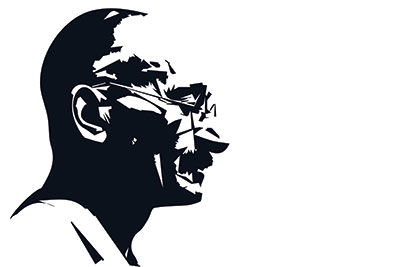 Note: Before reading this chapter, please read A Return to Love: The Soul’s Right to Dignity. It provides important context that will help you get the most from what follows.
Most men who want to be loved know, at some level, that they want it. What they struggle to do — what years of being valued for their productivity, their strength, their capacity to provide and endure without complaint have made genuinely difficult — is believe that they deserve it simply for being who they are. Not the conditional approval that arrives when they perform correctly. Not the respect that comes when they succeed or sacrifice or hold everything together without breaking. But the full, reverential, uncompromising devotion that a man can receive and surrender to without having first earned it moment by moment. The idea of being truly cherished — not for what he does but for what he is — is, for many men, almost impossible to hold without immediately deflecting it. This chapter is for those men. It is an invitation back into a worth that was always theirs and that the world was never supposed to take permanently away.
What I’m about to tell you may seem bold.
I’m about to tell you about three men with wills of pure steel and hearts of gold. Then I’m going to ask you to believe that somewhere deep inside you that same greatness exists. And then I’m going to show you how to prove it to yourself.
The stories of these men reveal what dignity looks like when a human being is stripped of everything except conviction, sacrifice, and unyielding will. The sacred ache of their hunger became a testimony to the power that can emerge when a man refuses to betray what he believes in.
As you read about the physical reality of what these men endured, some part of you will feel it in your own marrow.
By the end of this chapter—when it is time to do the exercise—your mind will have quieted enough for us to speak directly to your worth.
It is my hope that the words in this chapter challenge you, strengthen you, and awaken something that may have been sleeping inside you for a very long time.
What I am about to show you is a lineage of Magnificence that you are invited to join.
That invitation may land strangely — or not land at all, at least not at first. Most men were never taught to think of themselves as belonging to any lineage of magnificence. They were taught to be useful. To be strong. To endure, to solve, to show up without requiring too much in return. The idea that they might be worthy of reverence — not because of what they have accomplished or survived, but simply because of what they fundamentally are — can feel almost foreign. That discomfort is worth noticing. It is not evidence that the invitation is wrong. It is evidence of exactly how much ground there is to recover. The men you are about to meet did not discover their dignity by becoming perfect or by achieving the right things in the right order. They discovered it in conditions of extreme deprivation — stripped of comfort, freedom, safety, and everything the world ordinarily uses to measure a man’s worth — and found that something remained. Something that could not be confiscated. Something that had been there all along, quietly waiting to be recognized.
The following are the true stories of three men each of whom used fasting as a moral, political, spiritual, and philosophical discipline: Mahatma Gandhi, Bobby Sands, and Terence MacSwiney.
Fasting is often misunderstood. Most people think of it only in terms of food, deprivation, weight loss, religion, or self-control. But throughout human history, fasting has also been something far more dangerous and transformative. It has been used as prayer. As purification. As protest. As resistance. As a way for human beings to confront fear, sharpen conviction, and discover what remains when comfort is stripped away.
A genuine fast has a way of exposing the architecture of a person. It reveals where conviction ends and performance begins. It confronts the body with discomfort and asks a terrifyingly simple question: What matters enough to suffer for?
These men answered that question differently, in different centuries, under radically different political conditions. One transformed a prison cell into a stage upon which an empire was forced to defend itself before the conscience of the world. One challenged an empire through disciplined nonviolence. One died inside a prison cell during one of the most controversial hunger strikes of the twentieth century. Their politics were different. Their cultures were different. Their histories were different. But all three men understood something that modern life works very hard to make us forget:
Human dignity is not merely an idea. It is something a person must decide whether or not they are willing to embody.
That is why these men were chosen.
Not because they were perfect. Not because every action they took was beyond criticism. And not because suffering itself is noble. They were chosen because each of them, in his own way, reached a point where preserving inner integrity became more important than physical comfort, public approval, or even survival itself.
Most people never encounter that part of themselves.
Most people spend their lives adapting, negotiating, shrinking, performing, apologizing, abandoning their instincts, tolerating half-hearted love, and slowly forgetting the sound of their own deepest convictions. We live in a world that constantly pressures human beings to betray themselves in exchange for safety, acceptance, convenience, or numbness.
This chapter is an invitation to interrupt that process.
Not through ideology.
And not through punishment.
But through encounter.
As you move through these stories, I want you to pay attention not only to the minds of these men, but to their bodies. To the loneliness. To the fear. To the determination. To the ache. To the moments where the human organism itself became the final instrument through which conscience could still speak.
Because something extraordinary happens when a person willingly enters discomfort in service of meaning. The noise begins to fall away. Performance falls away. Pretending falls away. And beneath all of it, something sacred and more honest begins to emerge.
That is the threshold you are about to approach. Not merely an intellectual understanding of dignity. But an embodied encounter with it.
First, I am going to tell you the stories of three men: Mahatma Gandhi, Terence MacSwiney, and Bobby Sands. I am having you read about them so you can get a glimpse into their magnificence, and so when you later complete the exercise you will fully understand what it means when you recognize that those same qualities exist within you.
Hunger Striking: What It Is and Why I’m Using It
All of the men discussed in this exercise participated in hunger strikes.
A hunger strike is a form of nonviolent protest in which a person voluntarily refuses food in order to draw attention to a cause, principle, or injustice they believe is important. They do it for the people they love. In their own ways, each of these individuals stood in the gap between injustice and fairness, accepting personal suffering in service of others. Throughout history, hunger strikes have been used by people from many cultures, political movements, and religious traditions.
The purpose of this exercise is not to encourage hunger striking, nor is it intended to compare a skipped meal to the profound sacrifices made by the men described in these pages. I’m featuring these men because they demonstrated unusual courage, conviction, devotion, and willingness to endure discomfort for something they believed mattered. They embodied magnificence.
The purpose of this exercise has nothing to do with hunger striking or politics.
The purpose is much more personal. It has to do with helping you to recognize the magnificence of your dignity and worth.
Once you are emersed in the exercise I am going to ask you to touch the part of yourself that is as great as each of them. And believe that you are just as worthy of deep, devoted love as they were.
The Fast as Force: The Life and Hunger Strikes of Mahatma Gandhi
The Man
Mahatma Gandhi is remembered as one of the central figures of India’s struggle for independence, a man whose philosophy of nonviolence changed political history and inspired movements for justice across the world. Yet before people began calling him “Mahatma,” a Sanskrit-derived term meaning “great soul,” Mohandas Gandhi was a shy and deeply sensitive boy who wept at suffering, struggled with fear and self-doubt, loved fiercely, failed publicly, questioned himself relentlessly, and spent his life trying to bring his actions into alignment with his conscience. He was a husband, father, lawyer, writer, spiritual seeker, and imperfect human being whose greatness emerged not from perfection, but from his relentless willingness to keep growing, keep questioning himself, and keep choosing love, truth, and dignity even when doing so demanded enormous personal sacrifice.
His Story
Mohandas Karamchand Gandhi is among the most written-about human beings of the twentieth century, yet the full dimensions of his genius remain surprisingly easy to underestimate. He is remembered as a saint, as an icon of nonviolent resistance, as the father of a nation — images that have a way of flattening the actual man into something more statue than person. The real Gandhi was subtler, more conflicted, more strategically brilliant, and more physically daring than the mythology suggests. Nowhere is this more evident than in his use of the hunger strike, which he employed not as a gesture of despair but as a precision instrument of moral and political pressure — one that he understood deeply, deployed carefully, and was willing to take to the absolute edge of his life on multiple occasions.
From Porbandar to the World Stage
Gandhi was born on October 2, 1869, in Porbandar, a small coastal city in what is now the Indian state of Gujarat. His family was of the Vaishya caste, his father a local administrator, his mother a devoutly religious woman whose practice of fasting as spiritual discipline left a permanent impression on her son. He was an unremarkable student, shy and awkward in social situations, and nothing in his early years suggested the figure he would become. He traveled to London to study law at the age of eighteen, and the experience of navigating a foreign culture — learning to dress correctly, to eat correctly, to speak correctly in the English manner — sharpened his sense of both the power and the absurdity of social performance.
It was South Africa, where he traveled in 1893 to practice law, that transformed Gandhi into a political thinker. The famous incident on the train to Pretoria, where he was ejected from a first-class compartment despite holding a valid ticket because of the color of his skin, is often cited as his political awakening — but it was less a single incident than an accumulation of experiences with systematic racial humiliation that radicalized him. He remained in South Africa for twenty-one years, organizing the Indian community there, developing the concept of satyagraha — often translated as “truth-force” or “soul-force” — and beginning to understand that the most powerful weapon available to the oppressed was not violence, which the oppressor could always meet with superior force, but moral witness, which could not be countered without moral cost.
When Gandhi returned to India in 1915, he arrived as a figure already respected throughout the subcontinent, though the scale of what lay ahead was still unknowable. Over the following three decades, he would lead or inspire virtually every major campaign against British colonial rule: the Non-Cooperation Movement of 1920–1922, the Salt March of 1930, the Quit India Movement of 1942. He was arrested repeatedly, imprisoned for years at a time, and yet continued to find ways to exert influence even from behind bars. He also refined and transformed the hunger strike into something without real precedent in political history.
Gandhi’s Philosophy of Fasting
Gandhi’s relationship to fasting was rooted in Hindu spiritual practice long before it became a political tool. He had observed his mother fast regularly as an act of devotion, and he incorporated fasting into his own spiritual regimen from early adulthood. In his ashrams, periodic fasting was a communal discipline, a way of cultivating self-mastery and purifying intention. This spiritual foundation mattered enormously, because it meant that when Gandhi fasted publicly and politically, he was not importing an alien tactic — he was extending an existing practice into a new domain, in a way that his audience understood and found culturally legible.
He wrote extensively about the ethics and mechanics of fasting, insisting that a genuine fast — what he called a fast “unto death” — must be undertaken only after exhaustive attempts at other means, must be directed at people with a genuine relationship to the faster, and must be capable of evoking a change of heart rather than mere political capitulation. He was impatient with fasting as theater, and worried explicitly that his own example would inspire imitators who lacked the spiritual preparation to sustain a genuine fast or the political judgment to deploy one appropriately. In his view, fasting was not a tool for extracting concessions by making an opponent uncomfortable; it was a way of offering one’s own suffering as testimony to the depth of one’s commitment to truth, in the hope that witnessing that suffering would unlock something genuine in those who had the power to change things.
The 1932 Fast: Saving the Depressed Classes
The hunger strike that most directly altered the course of Indian constitutional history began on September 20, 1932, while Gandhi was imprisoned in Yeravda Central Jail in Pune. The trigger was the British government’s announcement of the Communal Award, a plan by Prime Minister Ramsay MacDonald to grant separate electorates to the Untouchables — the caste group Gandhi called Harijans, or “children of God” — alongside separate electorates for Muslims, Sikhs, and other communities. Gandhi was bitterly opposed to separate electorates for Untouchables, not because he was indifferent to their oppression — his campaigns against untouchability were genuine and sustained — but because he believed that separating them into a distinct political class would permanently sever them from the Hindu community and from India’s emerging national identity, deepening rather than healing the wound of caste.
He announced that he would fast unto death unless the Communal Award was revised. The announcement detonated a political crisis. B.R. Ambedkar, himself an Untouchable and the most formidable advocate for that community’s rights, was placed in an agonizing position: he regarded Gandhi’s opposition to separate electorates as a form of paternalism that denied Untouchables genuine political agency, and he was profoundly suspicious of Gandhi’s motives. Yet if Gandhi died, the resulting backlash against Untouchables could be catastrophic. Ambedkar negotiated furiously, meeting with Gandhi in jail and working with other political leaders to craft an alternative arrangement. The resulting Poona Pact — signed on September 24, 1932, just before Gandhi’s health reached a critical threshold — replaced separate electorates with a system of reserved seats within joint electorates, guaranteeing Untouchable representation without formal separation. Gandhi broke his fast after six days. The episode remains contested: Ambedkar later wrote that he had been coerced by the prospect of Gandhi’s death into accepting terms less favorable to Untouchables than separate electorates would have been, and historians continue to debate whether Gandhi’s intervention helped or harmed the cause of caste equality in the long run.
The 1943 Fast: Resistance from Prison
In February 1943, Gandhi undertook a twenty-one-day fast while imprisoned at the Aga Khan Palace in Pune, where he had been held since his arrest following the Quit India Movement in August 1942. The fast was directed not at a specific policy but at the British government’s treatment of the Indian National Congress and its refusal to acknowledge any legitimate grievance behind the Quit India campaign. Gandhi was sixty-three years old, in fragile health, and grieving — his longtime secretary Mahadev Desai had died in custody in August, and his wife Kasturba, also imprisoned, was declining rapidly. The British government, convinced that Gandhi was faking the severity of his condition for political effect, refused to release him and publicly predicted that he would abandon the fast before it became dangerous.
He did not abandon it. By the tenth day, Gandhi’s condition had deteriorated sharply, and medical personnel reported genuine fears for his survival. The fast ran its full twenty-one days, ending on March 3, 1943. Gandhi had proven that his commitment was not performative, but the British government remained unmoved on the substance of his demands. Kasturba died in February 1944, still imprisoned, which Gandhi mourned as one of the great sorrows of his life. The 1943 fast demonstrated both the power and the limits of the instrument: it produced moral clarity without political concession, and it took a physical toll on Gandhi from which he never fully recovered.
The 1948 Fast: The Last Witness
Gandhi’s final and perhaps most remarkable fast began on January 13, 1948, in Delhi — just months after Indian independence and in the immediate aftermath of the catastrophic violence of Partition. Hundreds of thousands of people had died in communal massacres between Hindus and Muslims, millions had been displaced, and Delhi itself was riven with riots and retaliatory killings. Gandhi, at seventy-eight and in deteriorating health, announced that he would fast until the violence stopped and until Hindu, Muslim, and Sikh leaders made credible commitments to coexistence. He broke the fast five days later, on January 18, after receiving pledges from religious and political leaders across communal lines. It was an extraordinary final act — a man near the end of his physical resources spending those resources on the most urgent moral emergency he could see. Twelve days later, on January 30, 1948, he was assassinated by Nathuram Godse, a Hindu nationalist who believed that Gandhi’s defense of Muslims represented a betrayal of India.
Gandhi’s hunger strikes did not always achieve their stated objectives, and they generated genuine controversy — particularly among those who saw in them an element of coercion dressed in spiritual clothing. But as instruments for making the interior life of a moral commitment visible to the world, they have rarely been matched. He showed that the body, offered in complete sincerity, could speak louder than any argument.
The best way to find yourself is to lose yourself in the service of others.
– Mahatma Gandhi
Terence MacSwiney: The Playwright Who Taught the World That Courage Can Outlive a Body
The Man
Terence MacSwiney was an Irish playwright, politician, and the Lord Mayor of Cork during the 1920 Irish War of Independence. His death in London’s Brixton Prison after a 74-day hunger strike became a defining moment of 20th-century anti-colonial resistance, popularizing non-violent suffering as a potent weapon against imperial oppression. The 74-day fast transformed a local political struggle into an international phenomenon. The grueling fast provoked widespread media coverage and sympathetic strikes from the New York waterfronts to Barcelona. It intensely damaged the moral and political standing of an entire empire: the British Empire. But as you will discover, his magnificence was about far more than politics. He was a man willing to sacrifice himself for the benefit of others.
MacSwiney’s writings—especially his posthumously published book Principles of Freedom—argued that victory belongs not to those who inflict the most, but to those who can endure the most.
Most people have never heard of Terence MacSwiney. Yet his life rippled outward across the twentieth century in ways that touched some of its most consequential figures — including Mahatma Gandhi, Jawaharlal Nehru, and generations of Irish freedom activists including Bobby Sands. His life and death helped shape the moral imagination of the world. This is the story of his life, why his hunger strike happened, and why it still matters.
His Story
Terence James MacSwiney was born in Cork City on March 28, 1879, the son of a schoolteacher father who later emigrated to Australia, leaving his family behind, and a deeply religious mother who raised her children in the intersection of English Catholic faith and fierce Irish nationalist conviction. The abandonment by his father, the poverty that followed, the responsibility that fell early — these are the conditions that formed a man who would spend his life thinking seriously about what human beings owe each other and what they are capable of enduring.
He left school at fifteen to work as an accounting clerk but refused to abandon his intellectual development. He eventually graduated from the Royal University in 1907. In 1901 he helped found the Celtic Literary Society. In 1908 he founded the Cork Dramatic Society. He wrote plays. He wrote poetry. He wrote essays on national identity, character, and the moral foundations of freedom.
Before he became a symbol, he was a husband, a father, a writer, and a teacher — a man who believed that stories and ideas shape nations. He married Muriel Murphy in 1917. Their daughter Máire was born in 1918. He was forty-one when he died. Máire was two years old.
Friends and colleagues remembered him as thoughtful, gentle, and intensely serious without being dour. He possessed the unusual combination of a literary temperament and a practical one — a man equally comfortable discussing ideas, organizing political activity, teaching, or writing late into the night. He loved books, language, theatre, and the life of the mind, but he was not detached from ordinary life. The future Lord Mayor of Cork spent years working, teaching, writing, and helping build the cultural institutions he believed Ireland needed. He was not born a symbol. He became one.
The Playwright Who Believed in Ideas
To understand what Terence MacSwiney did at the end of his life, you have to understand what he believed in the middle of it. He was, at his core, a man of the imagination — someone who understood that the interior life of a people, the stories they tell themselves about who they are and what they are capable of, determines what they will actually do in the world.
His play The Revolutionist (1914) explored questions of conscience, loyalty, and sacrifice. This was not accidental. Long before prison made him famous, MacSwiney had been fascinated by the question that sits at the center of every great drama: What does a person do when conscience demands a price? His plays repeatedly explored the collision between comfort and conviction, between safety and duty, between what is easy and what is right. Years before history handed him that question in his own life, he had already been asking it as a writer.
His essays, collected and published posthumously as Principles of Freedom (1921), argued that genuine freedom is not merely a political condition but a moral and spiritual one — that a people who have not developed their own inner resources cannot be genuinely free regardless of external circumstances.
This was not abstraction for MacSwiney. It was a lived conviction. The literary sensibility gave him the ability to see beyond the immediate moment into the meaning that the immediate moment might carry. It gave him the capacity to understand that what he did with his life could reverberate outward in ways he would not live to see.
The Husband and Father
By 1920, MacSwiney’s ideals were no longer abstract. He was married to Muriel, whom he deeply loved, and he was the father of a little girl. This is important because it is easy to imagine sacrifice when we forget what someone had to lose.
Terence did not walk into prison as a solitary revolutionary detached from human attachments. He walked into prison as a husband and father. He knew exactly who would bear the cost of his decisions. He knew his wife would suffer. He knew his daughter might grow up without him. The choice before him was therefore not between life and death but between competing loyalties: loyalty to family and loyalty to conscience.
What makes his story remarkable is not that he failed to understand the cost. It is that he understood it completely.
Lord Mayor, Prisoner, Hunger Striker
In March 1920, Tomás MacCurtain — Lord Mayor of Cork and MacSwiney’s close friend — was murdered by British security forces. MacSwiney was elected to succeed him. He held the office for five months.
On August 12, 1920, British forces arrested him in Cork City Hall, charging him with possession of a police cipher and what were termed seditious documents. He was tried by military court, convicted, and sentenced to two years in prison. He was transferred to Brixton Prison in London.
He began a hunger strike the day of his arrest. At his court martial, he told the military tribunal: “I shall be free, alive or dead, within a month.” He was wrong about the month. He was right about the freedom.
The hunger strike lasted seventy-four days. As the weeks passed, the international attention became extraordinary. Newspapers across Europe, the United States, India, and beyond carried daily reports of his condition. Crowds gathered outside Brixton Prison. The British government, which had the power to release him at any time, declined. He died on October 25, 1920.
The hunger strike ceased to be an Irish event and became an international one. In response to the strike, 3,000 longshoremen in the United States pledged to refused to load goods for British-flagged merchantmen until all British forces were withdrawn from Ireland, and four South American nations appealed for Pope Benedict XV to intervene. Thirty thousand people came to see his body at St George’s Cathedral in London. His funeral in Cork drew enormous crowds.
The Man Who Influenced Gandhi
Mahatma Gandhi acknowledged MacSwiney’s influence, writing: “It has been the magnitude of the Irish sacrifice which has been the deciding factor.” Gandhi was in the process of developing his philosophy of nonviolent resistance, and MacSwiney’s hunger strike demonstrated something Gandhi recognized immediately: that the willingness to suffer rather than to inflict suffering is a moral force that political power struggles to counter.
Jawaharlal Nehru took inspiration from MacSwiney’s example and writings. The Indian revolutionary Bhagat Singh was an admirer who wrote about him in his memoirs. When Singh’s father petitioned the British Government to pardon his son, Bhagat Singh quoted MacSwiney and said: “I am confident that my death will do more to smash the British Empire than my release” — and told his father to withdraw the petition.
Ho Chi Minh, who was working in London at the time of MacSwiney’s death, said of him: “A nation that has such citizens will never surrender.”
These are not peripheral figures. They are among the defining political figures of the twentieth century. Each was shaped, in some in conscience could speak to the world in ways that words and weapons could not.
His Influence On The 1981 H-Block Hunger Strikers
Sixty years after Terence MacSwiney’s death, the ten men who participated in the 1981 H-Block hunger strike understood themselves as standing in a tradition that MacSwiney had helped establish. Courage, it turns out, travels across generations. A man who died in 1920 was present, in some essential way, in the choices made by those men in 1981, all of whom were influenced by MacSwiney’s example.
The ten men who died during the hunger strike were Bobby Sands, Francis Hughes, Raymond McCreesh, Patsy O’Hara, Joe McDonnell, Martin Hurson, Kevin Lynch, Kieran Doherty, Thomas McElwee, and Mickey Devine. Each of these men chose to hunger strike as an expression of their devotion to the people they loved and the principles they believed were worth defending.
Bobby Sands was the first to die and has subsequently received the greatest public attention. As Sands lay in a cell at the Maze Prison in Northern Ireland, sixty-six days into his own hunger strike, MacSwiney’s sacrifice had become part of the living memory of Irish republicanism — a demonstration that endurance could be a form of power, that the body offered in conscience could speak to the world in ways that words and weapons could not.
What Made Terence Different
He was not a man of hatred. His writings are notably free of bitterness toward the English people — he distinguished carefully between a political system he opposed and the human beings within it. He was a man of faith — deeply Catholic, shaped by the understanding that human dignity is not merely political but sacred.
He was a husband and a father. He left behind a two-year-old daughter and a wife who would spend years afterward fighting to preserve his memory. The personal cost of his choices was enormous and entirely visible to him. He made them anyway.
His most frequently quoted principle — “It is not those who can inflict the most, but those who can suffer the most who will conquer” — is not a call to passivity. It is a reorientation of power. It insists that the person who can endure for something true wields a different and deeper force than the person who can cause pain.
Why He Still Matters
What do we value enough to sacrifice for? What gives suffering meaning? Can one person’s courage influence people they will never meet?
In MacSwiney’s case, the historical record answers that last question unambiguously. Gandhi, Nehru, Bhagat Singh, Ho Chi Minh, Bobby Sands — none of them met Terence MacSwiney. All of them were shaped by him.
He is part of this book’s tradition not because he suffered, but because of what his suffering expressed. Courage. Faith. Love of family. A willingness to see beyond himself. An understanding that the measure of a life is not merely what it costs, but what it gives to those who come after. The playwright who spent his life exploring the power of ideas ultimately became one of the most powerful ideas of all.
If I die the fruit will exceed the cost a thousandfold. The thought of it makes me happy. I thank God for it.
– Terence MacSwiney
Bobby Sands: A Life of Passion, Purpose, and Love
The Man:
Bobby Sands was the first of ten Irish republican and Irish National Liberation Army prisoners to die during the 1981 hunger strike in HM Prison Maze in Northern Ireland. He died on May 5, 1981, after sixty-six days without food, becoming one of the most internationally recognized figures of the violent political conflict between Irish republicans, British authorities, and unionists in Northern Ireland during the late twentieth century. Yet before Bobby Sands became a symbol carried through history, he was a son, a father, a writer, a musician, a friend, and a profoundly human young man whose life was far larger than the manner of his death.
His Story:
Bobby Sands was a man of extraordinary spirit, whose life was defined not only by his convictions but by the love, laughter, and humanity he shared with those around him. He was born in 1954 in Rathcoole, outside Belfast, the kind of neighborhood where community was stitched together from small loyalties — the faces you knew on every corner, the shared language of a particular street, the bonds forged by proximity and hardship.
From the beginning, Sands was known as someone who lit up a room. People who knew him as a boy and young man remember his humor, his quick wit, his gift for making others feel seen. He was the kind of person who remembered details about people’s lives and asked about them later, which is a rarer quality than it sounds. He loved music, particularly traditional Irish music, and he played the tin whistle and the guitar. He loved Gaelic football. He loved the ordinary pleasures of friendship — conversation, laughter, the particular warmth of people gathered together around something they cared about.
Those who knew him consistently describe someone brimming with personality. He was funny. Not performatively funny in the way of people who need an audience, but genuinely, naturally funny — the kind of person whose observations about everyday life made people laugh before they quite realized why. He was also tender. He was devoted to his son Gerard, and those who witnessed him as a father speak of a man who was fully present, affectionate, and fiercely loving. Fatherhood mattered to him in a way that was visible and unashamed. He wore it openly, the way people do when love is the truest thing they know about themselves.
What is sometimes overlooked, because his death has cast such a long shadow over everything that came before it, is that Sands was a genuinely gifted writer. He wrote poetry, personal reflections, diary entries, and political commentary, and what runs through all of it is not bitterness but remarkable vitality. His writing crackles with imagery, with humor, with an almost defiant love of beauty. In One Day in My Life, written during some of the most brutal conditions imaginable, he describes birdsong, the particular quality of light through a prison window, the texture of memory, and the stubborn persistence of hope. He wrote about the small sensory pleasures — the sound of rain, the idea of green fields — with the vividness of someone who understood that paying attention to beauty is itself a form of resistance. His literary voice was distinctive: earthy, lyrical, direct, and deeply alive.
His most famous poem, The Rhythm of Time, speaks of a force embedded in human history that cannot be permanently extinguished — a spirit of dignity and refusal that rises again and again across cultures and centuries. It is not a poem of despair. It is, at its core, a poem of deep and stubborn hope.
People who spent time with Bobby Sands in the years before and during his imprisonment describe someone who managed, improbably, to remain oriented toward life rather than away from it. Even in confinement, Bobby continued creating warmth, humor, and community around him, because that is what people with genuine warmth do — they cannot help it.
Bobby’s political convictions grew from the world he was born into. Northern Ireland in the late 1960s and early 1970s was a place of genuine upheaval, where Catholic nationalist communities faced structural discrimination in housing, employment, and political representation, and where the violence shaped the daily texture of ordinary life. He came of age inside all of that — the roadblocks and curfews, the sound of helicopters overhead at night, the particular anxiety of living in a community that felt besieged. His eventual involvement with the Irish republican movement was not an abstraction to him. It was personal, rooted in the specific geography of his experience and his deep identification with the people around him.
In 1972, Bobby was arrested for possession of firearms and served several years in prison. After his release, he became involved again with the Irish republican movement and was later arrested in connection with a bombing operation in 1976. Although Bobby maintained that he had not participated in the shooting that occurred during the incident, he was convicted of firearms charges and sentenced to fourteen years in prison. It was during this second imprisonment, inside the harsh and escalating conditions of the Maze Prison protests, that Bobby Sands would eventually become one of the central figures of the 1981 hunger strike.
Bobby Sands was twenty-seven years old when he died, and if you allow yourself to stop there — at the number, at the age — something catches in the chest. Twenty-seven is still young enough to believe your best years are ahead of you. It is young enough to fall in love again, to change your mind about something important, to write a poem that surprises even yourself. Bobby was twenty-seven, and he had already done most of those things. He had already lived with a depth and richness that many people twice his age never manage.
Yet even within the full historical complexity of his life — which included real violence and genuine moral controversy — the human being himself remains something worth celebrating. Bobby loved people, could make an entire cellblock laugh during some of the darkest days imaginable, and produced writing that still stops readers cold decades later. Someone who, facing death at twenty-seven, continued to express tenderness and even joy in the private pages of his diary.
By the time the second hunger striker, Francis Hughes, died at the age of 25 on May 12, 1981, grief and fury had begun to sweep through nationalist communities across Ireland. Thousands of young people poured into the streets, clashing with British security forces and hurling bricks and petrol bombs in protest. Coming only seven days after the death of Bobby Sands, Hughes’s death intensified the unrest and hardened the resolve of many who saw the hunger strikers as symbols of sacrifice, resistance, and national dignity. Francis Hughes was no longer simply following Bobby Sands into death. In the eyes of many young nationalists, he had become a symbol of courage and sacrifice in his own right—as would the remaining eight hunger strikers in the weeks and months that followed. Each of the man’s deaths intensified the grief as they occurred one after the other. Their deaths, spanning from May to August 1981, caused a mounting sense of tragedy across nationalist communities as one man after another perished following weeks of starvation.
The suffering endured by the ten hunger strikers does not diminish the profound suffering experienced by those who were killed, injured, or bereaved during the conflict in Northern Ireland. Neither should that suffering prevent us from recognizing the courage, humanity, and extraordinary self-sacrifice of the men themselves. History sometimes asks us to hold truths that do not cancel one another. This is one of those times.
When you sit with Bobby Sands’ image during this exercise, let yourself encounter someone who was, above all things, fully alive. Let yourself feel the warmth and humor and literary gift and fierce love that characterized this man long before he became a symbol of anything. History keeps his name. What this exercise asks of you is something more intimate: to receive him, briefly, as a human being — someone who played guitar and wrote poetry and laughed with friends and adored his son and found the light worth noticing even when the walls closed in.
A person who truly encounters their own dignity becomes far less willing to accept relationships built on indifference, contempt, emotional starvation, or half-hearted love. Once you begin to understand your own worth, you begin to hunger for relationships that honor it. That kind of aliveness deserves to be met with our own.
Our revenge will be the laughter of our children.
– Bobby Sands
You have just spent time with three men who each, in their own way, arrived at the same conclusion: that there are things more important than comfort, approval, or even survival. That a man’s interior worth exists independently of his performance, his productivity, his achievements, or what the world decides to offer him in return for his sacrifice. Gandhi knew this. Bobby Sands knew this. Terence MacSwiney knew this. And the question this exercise now asks of you is not whether you can match what these men endured — you cannot, and you are not being asked to. The question is simpler and, for many men, considerably harder: whether you are willing to sit quietly with a skipped meal and a few honest pages of writing and consider that the same interior worth exists in you. Not because you have suffered enough to earn it. Not because you have been strong enough or successful enough or useful enough to deserve it. But because you are a human being — because you were born into this world already carrying it — and because no amount of conditioning, disappointment, or accumulated evidence to the contrary was ever supposed to convince you otherwise. That is what this exercise is actually for.
These Three Men’s Stories
Bobby Sands’s story may be emotionally difficult for some readers because it confronts us with a young man who believed in something so deeply that he willingly gave his life for it. Terence MacSwiney’s story may also be emotionally difficult when you realize that he chose to die for his beliefs while leaving behind a wife and a two-year-old daughter. Yet it’s important to recognize that Mahatma Gandhi also believed in his convictions so completely that he, too, was willing to sacrifice his life for them. While their histories, politics, and circumstances were very different, all three men shared a willingness to endure profound suffering rather than betray what they believed mattered most.
It’s at this junction that I invite you to consider something carefully: that the same fire—the fire of conviction, dignity, and love—lives in you too.
The Magnificent Protocol™
Here is the exercise that I call “The Magnificent Protocol” because of the magnificent men it represents. As you read in the previous chapter “A Return to Love: The Soul’s Right to Dignity” this exercise is based on decades of research. But it is also based on the connection you will establish with the men you just read about.
When you do the following exercise, please follow the steps closely. Following the sequence as well as the content of the steps themselves is important for the success of the exercise.
In the previous chapter, I discussed the purpose of this exercise, but it’s important to say it here again.
The way this exercise is tied to “worshipping and being worshipped” and finding the “hot and holy love” described in this book is because it directly strengthens a man’s sense of his own worth. The more deeply you believe, in your body, mind, and soul, that you are worthy of reverence, tenderness, passion, loyalty, and profound love, the more capable you become of 1) successfully worshipping your partner, 2) allowing yourself to be fully worshipped by your partner, and 3) abandoning yourself to the ecstasy of deep love.
So have it with your whole heart.
Here is the exercise step-by-step.
The Exercise
Tools You Will Need
1. Computer
2. Printer
3. Printer paper
4. Tape
5. Notebook or paper
6. Pen or pencil
7. A warm blanket
Step One:
Google the following men’s names and print out photographs of all three of them:
Mahatma Gandhi
Bobby Sands
Terence MacSwiney
Step Two:
Tape all three of the men’s photographs onto a wall in your home that you naturally see throughout the day—your bedroom, kitchen, hallway, or living room.
Step Three:
Leave the photographs on your wall for seven days.
During this time, look at your schedule and choose a day where you can safely skip either lunch or dinner at home. Make sure the meal that you choose to skip is a meal you normally have on a regular basis.
Note: If you have health problems discuss with your doctor which meal you can safely skip. Only if they are concerned with your skipping a meal entirely should you ask them if you can delay the meal by a few hours.
Step Four:
On the day you skip your meal, you need to remain at home to complete the exercise.
Before you begin, stand quietly in front of the photographs taped to your wall. Look at each person thoughtfully.
Remember that every one of them willingly endured discomfort, sacrifice, uncertainty, or suffering because they believed something mattered more than their immediate comfort.
Think about the fact that all three of these men believed deeply in love, specifically in the context of love for family, people, and country.
Step Five:
As you skip your meal, notice carefully when hunger begins appearing in your body.
Where do you feel it?
You may discover that hunger is experienced in places beyond the stomach. You may feel it in your chest, throat, jaw, shoulders, emotions, thoughts, or nervous system.
Write down where you feel hunger in your body.
Then write down how the hunger affects your emotions, thoughts, attention, memories, and sense of self.
Step Six:
Now sit quietly with the following statement:
All three people on your wall were human beings who willingly endured profound sacrifice for people they loved and for what they believed in.
Now write:
“I am every bit as worthy of all the beautiful things life has to offer, most importantly a devoted loving partner who cherishes every part of me.
Because it is true. I deserve this. I am worthy.”
Write down how this statement makes you feel.
Step Seven:
I call this the cuddly step.
Take a large throw blanket or small bed blanket and throw it in the dryer for 10 minutes. Then sit either in bed or your most comfortable chair with the blanket wrapped around you. Close your eyes. As you sit, feel the warmth of the blanket wrapped around you feel the arms of your beloved embracing you, caressing you. And think about how you deserve all of this love, warmth and devotion.
Sit for as long as you are comfortable.
Anchors: A Final Exercise Note
Repeat any step of this exercise – or all the steps whenever you feel the need. Each step has mutliple anchors in them. Anchors are psychological tools that re-attach to the original experience. For example, do Step Four and skip a meal when you want to feel a deeper sense of your power and worthiness. Or do Step Seven again and wrap yourself in a blanket when you want to feel embraced and loved. I invite you to create whatever anchors you need in order to build the bridges and paths to your hot and holy love.
I have completed this exercise many times over the past decade. Every time I do it, moves me more deeply. It has changed me and continues to change me, and it’s my hope that it will help you discover something beautiful about yourself as well.
This is the end of the exercise…
and the beginning of you believing that you deserve the best that life and love have to offer.
Integration and Re-Entry After The Magnificent Protocol
What you have just completed may affect you more deeply than you expected. For some readers, The Magnificent Protocol will feel moving, inspiring, grounding, emotionally clarifying, or spiritually meaningful. For others, it may feel unexpectedly intense. You may notice lingering emotions, vivid dreams, grief, humility, emotional openness, tenderness, existential reflection, or a temporary shift in how you perceive yourself, humanity, love, suffering, devotion, or the preciousness of life itself. Some readers may feel deeply energized afterward, while others may feel emotionally raw, contemplative, psychologically opened, or temporarily unsettled. All of these reactions are valid.
The purpose of this exercise was never to glorify suffering, romanticize starvation, encourage self-erasure, or create a hierarchy of human worth based on sacrifice. The purpose was to help you encounter dignity, conscience, devotion, courage, tenderness, and embodied humanity in a direct and emotionally meaningful way. It was designed to interrupt ordinary patterns of distraction and emotional numbness long enough for you to feel something many people spend years trying to outrun: the depth of their own humanity and the humanity of others.
If you find yourself emotionally affected in the hours, days, or weeks after completing these exercises, please move slowly and gently with yourself. You do not need to force conclusions, dramatic life changes, spiritual interpretations, or immediate transformation. You are not required to “become” a historical figure, martyr, revolutionary, saint, or spiritual ascetic. The goal is not to imitate the lives of these hunger strikers. The goal is to recognize that the capacities for courage, love, dignity, devotion, conscience, emotional openness, and sacrifice exist within humanity itself, including within you.
It is also important to remain connected to ordinary life during the integration process. Eat nourishing food. Hydrate. Sleep deeply. Spend time outdoors. Move your body gently. Laugh. Listen to music. Sit with people who make you feel emotionally safe and grounded. Spend time with friends, loved ones, spiritual community, recovery community, therapist, counselor, mentor, pastor, sponsor, or other emotionally supportive individuals if that feels helpful to you. Sometimes emotionally intense experiences need conversation, reflection, grounding, and relational support in order to integrate fully and healthily.
For some readers, one of the most unexpected aspects of this exercise may be a profound sense of humility. You may find yourself emotionally shaken not only by the suffering of these historical figures, but by the realization that extraordinary capacities for conviction, courage, tenderness, endurance, and love exist within ordinary human beings. That realization can temporarily reorganize one’s sense of scale, identity, meaning, and perspective. If this occurs, try not to collapse into self-erasure or emotional minimization. Healthy humility does not say, “I am nothing.” Healthy humility says, “I am human among humans.” There is an important difference between the two.
You may also notice that your relationships begin feeling different after completing this work. Some readers report becoming less willing to tolerate emotional starvation, dishonesty, contempt, cruelty, emotional numbness, or relationships built on indifference. Others notice increased tenderness, gratitude, emotional courage, compassion, reverence, or longing for deeper forms of connection and intimacy. Allow these insights to unfold slowly. Lasting transformation rarely emerges from forcing revelation. More often, it emerges from remaining honest with yourself over time.
Remember, the goal here is to strengthen the belief that you are in every way worthy of great love.
Most importantly, remember that The Magnificent Protocol is not an ending. It is an invitation back into life. The purpose of confronting dignity, devotion, suffering, love, conscience, and humanity so directly is not to detach from ordinary existence, but to return to it more awake, more emotionally alive, more reverent, more grounded, and more capable of loving both yourself and others deeply. The ultimate goal is not withdrawal from life, but fuller participation in it.
Carry what is meaningful forward gently. Leave behind what is not. Stay grounded in your body, your relationships, your spirituality, your humanity, and your daily life. And above all, remember this: the capacities that moved you during these exercises are not reserved for heroes alone. They are part of the human inheritance itself.
Decompression: Wrapping Up
What you have just completed was not merely an intellectual exercise. You interrupted the ordinary rhythm of your body, mind, and spirit long enough to encounter something many people spend years trying to outrun: their own dignity.
For a brief period of time, you chose not to immediately silence discomfort. You allowed yourself to feel hunger, reflect deeply, and stand in the presence of human beings who willingly endured extraordinary suffering in service of conviction, conscience, truth, and love. And then you were asked to recognize something both simple and radical: that the same human capacities that existed within those men also exist within you.
The purpose of this exercise was never to worship suffering. It was to encounter worthiness. To experience, not merely as an idea but as a felt reality within the body and nervous system, that you are worthy of reverence, tenderness, devotion, honesty, passion, and deep love.
Because once a person truly begins to believe that, something changes.
The standards change.
The boundaries change.
The relationships change.
The way the body carries itself changes.
Even desire changes.
A person who encounters their own dignity becomes less willing to abandon themselves to relationships built on indifference, contempt, dishonesty, emotional starvation, or half-hearted love. At the same time, they often become more capable of loving others with presence, loyalty, courage, tenderness, and reverence.
You do not need to become a political prisoner, revolutionary, or historical figure to live with dignity. Human life offers endless opportunities to embody it:
telling the truth,
keeping your word,
protecting your heart,
remaining loyal,
allowing yourself to be seen,
and refusing to continue accepting love that diminishes your humanity.
Perhaps something inside you has already begun remembering this.
If so, protect it carefully.
And carry it into your life, your relationships, and your love.
Live boldly, Worship wildly. And allow yourself to be worshipped right back.
Randi Fredricks, Ph.D.
Chapter Companion Song Recommendation:
— The Soldier Francis Hughes, Freedom Flames 2026
The Magnificent Protocol™ is a trademark of Randi Fredricks.
Medical Disclaimer: This exercise is educational in nature and is not intended as medical or psychological treatment. Consult your physician before fasting, especially if you have any medical or mental health condition.
References (Mahatma Gandhi)
Brown, J. M. (1989). Gandhi: Prisoner of Hope. Yale University Press.
Chakrabarty, B. (2006). Social and Political Thought of Mahatma Gandhi. Routledge.
Dalton, D. (1993). Mahatma Gandhi: Nonviolent Power in Action. Columbia University Press.
Fischer, L. (1950). The Life of Mahatma Gandhi. Harper & Brothers.
Gandhi, M. K. (1927). An Autobiography: The Story of My Experiments with Truth. Navajivan Publishing House.
Gandhi, M. K. (1958–1994). The Collected Works of Mahatma Gandhi (Vols. 1–100). Publications Division, Government of India.
Guha, R. (2013). Gandhi Before India. Alfred A. Knopf.
Guha, R. (2018). Gandhi: The Years That Changed the World, 1914–1948. Alfred A. Knopf.
Parekh, B. (1989). Gandhi’s Political Philosophy: A Critical Examination. Macmillan.
Zelliot, E. (2013). Ambedkar’s World: The Making of Babasaheb and the Dalit Movement. Navayana Publishing.
References (Terence MacSwiney)
Costello, Francis J. Enduring the Most: The Life and Death of Terence MacSwiney. Brandon Books, 1995.
MacSwiney, Terence. Principles of Freedom. Talbot Press, 1921.
MacSwiney, Terence. The Revolutionist: A Play in Five Acts. Maunsel, 1914.
Cork City Council. “Lord Mayor Terence MacSwiney.” A City Remembers: Cork 1920–1923. https://www.corkcity.ie
Gandhi, Mahatma. Cited in: The Irish Times. “Indian Independence Commemoration to Remember Former Cork Mayor.” January 27, 2020.
O’Malley, Padraig. Biting at the Grave: The Irish Hunger Strikes and the Politics of Despair. Beacon Press, 1990.
Beresford, David. Ten Men Dead: The Story of the 1981 Irish Hunger Strike. Atlantic Monthly Press, 1987.
Townshend, Charles. The Republic: The Fight for Irish Independence, 1918–1923. Penguin Books, 2014.
Ward, Margaret. “MacSwiney, Mary.” In Dictionary of Irish Biography. Royal Irish Academy / Cambridge University Press, 2009.
References (Bobby Sands)
Beresford, D. Ten Men Dead: The Story of the 1981 Irish Hunger Strike. Atlantic Monthly Press, 1987.
Sands, B. One Day in My Life. Mercier Press, 1983.
Sands, B. Skylark Sing Your Lonely Song. Roberts Rinehart Publishers, 1991.
English, R. Armed Struggle: The History of the IRA. Oxford University Press, 2003.
Coogan, T. P. The IRA. HarperCollins, 2002.
Moloney, E. A Secret History of the IRA. W.W. Norton & Company, 2002.
This article is an excerpt from Randi Fredricks, Ph.D.’s forthcoming book Magnificent Men: How Men Are Undervalued and How Worshipping and Being Worshipped Can Bring You The Hot and Holy Love You Desire, exploring the restoration of men’s dignity and worth, the sacred and sensual dimensions of intimacy, and hot and holy love.
Author Bio
Randi Fredricks, Ph.D. is a best-selling author, psychotherapist, and leading expert in counseling, communication, and human connection. Her first published study, released in 1993, explored the impact of family dysfunction on intimacy and communication in adult relationships. For more than three decades, she has developed innovative therapeutic models to help individuals and couples create deeper connection, emotional resilience, and extraordinary relationships. Her work explores the intersection of psychology, spirituality, humor, eroticism, and human magnificence, helping people live more fully, love more deeply, and embrace the extraordinary possibilities of a beautiful life.