The New Science on Fasting
 For most of recorded human history, people fasted not because they understood the biology behind it, but because they discovered — through experience, through tradition, through the intimation of something ancient and reliable — that going without food did something profound to their mind, body and soul. What modern science is now confirming is that they weren’t wrong. They were just missing the vocabulary.
Valter Longo, Ph.D, director of the Longevity Institute at the University of Southern California and one of the most cited longevity researchers in the world, has spent decades investigating what extended fasting actually does to the human body at a cellular and molecular level. The results are extraordinary — and they circle back, in ways both poetic and clinically significant, to what mystics have always known.
The Biology: Breaking Down to Build Back Better
Bear with me while I explain the mechanisms at play here. For those of us dedicated to the practice of fasting, these processes are fascinating.
When the body is deprived of food for an extended period — Longo’s most significant research centers on cycles of two to four days of water-only or near-zero-calorie fasting — a cascade of biological events unfolds that looks, on a cellular level, very much like a controlled demolition followed by intelligent reconstruction.
The first shift is metabolic. Within twelve to sixteen hours, glycogen stores are depleted and the body transitions into a state of nutritional ketosis, switching its primary fuel source from glucose to ketone bodies derived from stored fat. This alone has measurable neurological effects: ketones are a cleaner-burning, more efficient fuel for the brain, and the transition is associated with increased mental clarity and reduced neuroinflammation.
By the second and third day of water-only fasting, something more dramatic begins. The body, deprived of external nutrients, initiates a process called autophagy — from the Greek for “self-eating” — in which cells begin systematically dismantling damaged, dysfunctional, or simply unnecessary components. Misfolded proteins, compromised mitochondria, cellular debris accumulated over years of oxidative stress: autophagy is the body’s housekeeping mechanism, and fasting is one of the most powerful inducers of it known to science. The protein mTOR, which normally signals cellular growth and proliferation when nutrients are abundant, is suppressed. Its suppression is the switch that throws autophagy into high gear.
The Stem Cell Discovery: The IGF-1 Connection
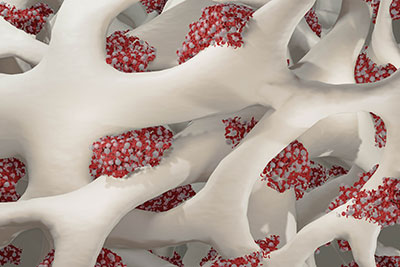
Longo’s landmark 2014 study, published in Cell Stem Cell, demonstrated something that initially seemed almost too good to be true: prolonged fasting causes a significant reduction in IGF-1 (insulin-like growth factor 1) and PKA (protein kinase A), two signaling molecules that normally keep stem cells in a dormant, quiescent state. When these signals drop, stem cells — particularly hematopoietic stem cells, the bone marrow cells responsible for producing every component of the immune system — are triggered to activate and proliferate.
The mechanism is essentially a biological fire sale. During fasting, the immune system begins breaking down old, damaged white blood cells. The body perceives its own depleted immune resources and responds by signaling bone marrow stem cells to regenerate. When the fast is broken and nutrients return, those newly activated stem cells divide rapidly, producing a fresh cohort of immune cells. The immune system is, in practical terms, rebooted.
In subsequent research and clinical trials using his Fasting Mimicking Diet (FMD) — a five-day low-calorie protocol designed to reproduce many of the same biological effects as water-only fasting — Longo’s team documented reductions in inflammatory markers, regeneration of beta cells in the pancreas, improvements in multiple sclerosis symptoms in mouse models, and measurable reductions in cancer risk biomarkers. The underlying mechanism across all of these was the same: programmed breakdown followed by stem-cell-driven renewal.
In a 2015 paper in Science Translational Medicine, Longo’s group demonstrated that three cycles of the FMD reduced risk factors for aging, diabetes, cardiovascular disease, and cancer. The body doesn’t just tolerate the stress of fasting. It uses it.
The Psychological Dimension: The Mind That Empties
What is less discussed in the peer-reviewed literature — though it deserves a great deal more attention — is what happens psychologically during an extended fast. Any clinician who has worked with patients through extended fasting protocols, or any practitioner who has undertaken one personally, will tell you that the inner landscape shifts in ways that are not simply attributable to ketones.
Around days two and three of a water-only fast, many people report a dissolution of what might be called the ego’s ordinary noise. The constant low-grade anxiety about food, social performance, productivity, and future-orientation quiets — partly because the body is directing its energy inward, and partly because the psychological structure that organizes itself around hunger, craving, and gratification is simply deprived of its usual inputs. What remains, for many people, is a quality of presence that is uncommon in daily life: sharp, unhurried, and strangely luminous.
From a psychological standpoint, this maps onto what transpersonal psychology describes as ego transcendence — not the permanent dissolution of self, but a temporary loosening of its grip sufficient to allow access to deeper layers of awareness. Abraham Maslow recognized fasting as one of the conditions capable of inducing peak experiences. Stanislav Grof’s holotropic frameworks would recognize the fast’s second and third days as liminal territory, a threshold state with genuine transformative potential.
There is also a growing body of evidence that autophagy, which fasting so powerfully induces, has direct neurological effects. Neuronal autophagy clears the cellular debris implicated in anxiety, depression, and cognitive decline. The brain, in other words, is also being cleaned and rebuilt. The subjective experience of clarity and calm that fasters report is not merely metaphorical. There is something being physically removed that was weighing the mind down.
The Spiritual Dimension: The Oldest Technology of Transformation
Every major wisdom tradition that has left a record has included fasting as a central practice. Moses fasted forty days before receiving the Torah. Jesus fasted forty days in the desert before his public ministry began. The Prophet Muhammad fasted regularly, and the month of Ramadan is structured around it. The Desert Fathers understood fasting as the foundational ascetic discipline, the one upon which all others depended. In Taoism, bigu — the practice of abstaining from grain and eventually from food altogether — was considered a pathway to immortality, understood not as the mere extension of biological life but as alignment with the eternal Tao. In the yogic traditions, fasting is prescribed as a method of purifying the subtle body and increasing prana, the life force that animates both the physical and the spiritual.
What these traditions understood intuitively is what Longo’s research is beginning to quantify: fasting doesn’t simply subtract. It subtracts in order to make room for something new. The biological reboot that stem cell regeneration represents is a structural metaphor for what contemplatives across centuries have called dying to oneself. The self that re-emerges from an extended fast is measurably different — biochemically younger in its immune system, neurologically quieter, metabolically reset — and experientially, many report feeling not just cleaner but somehow more themselves, as though layers of accumulated noise, habit, and defended identity have been metabolized along with the glycogen.
This is not coincidence. The body and the psyche and the spirit are not separate systems running on parallel tracks. They are a single integrated reality that responds, at every level, to the discipline of the fast. Valter Longo has given us the molecular vocabulary for something the mystics already knew in their bones: sometimes the most radical act of creation begins with profound letting go.
How the “Brutal Divine” Effects the Reboot:
The Hormetic Threshold: Science calls it hormesis—the idea that a “brutal” stressor triggers a massive survival response. While a normal person sees a 14-day fast as a “debacle,” the fasting mind sees it as a Sacred Siege. Because the faster merges with that intent, their nervous system doesn’t just panic; it optimizes. They are literally commanding their stem cells to “Rise and Rebuild” to meet the intensity of thier spirit.
What Happens During a 14-Day Water-Only Fast
It’s not uncommon for seasoned fasters to partake in fasts that are considerably longer than the fasts Longo looks researches. Longo’s foundational stem cell research was built on fasting cycles of two to four days, with his Fasting Mimicking Diet designed to extend those effects across five days in a clinically safer and more sustainable format.
Many veteran fasters eventually move to 7 and eventually 14 day water only fasts. A fourteen-day water-only fast moves well beyond the territory Longo studies — into a physiological landscape that is less formally studied in controlled human trials but about which the underlying biology speaks with reasonable clarity. The effects are not simply more of the same. They represent a qualitatively different order of biological reorganization.
By the end of the first week, the processes described in Longo’s research — IGF-1 suppression, PKA downregulation, deep autophagy, and the initial wave of hematopoietic stem cell activation — have not merely completed their first pass. They have continued to intensify and broaden. The immune system’s self-culling accelerates: old, senescent, and damaged lymphocytes continue to be broken down and reabsorbed, clearing the field at a pace that shorter fasts simply cannot achieve. The bone marrow’s stem cell populations, released from their suppression by persistently low IGF-1 and mTOR signaling, enter a sustained state of readiness. What begins as a reboot becomes something closer to a full architectural review.
Beyond the immune system, extended fasting of this duration begins to affect a wider range of stem cell populations. Mesenchymal stem cells — which give rise to bone, cartilage, fat, and connective tissue — show increased mobilization during prolonged caloric deprivation, as does BDNF (brain-derived neurotrophic factor), which supports the proliferation of neural progenitor cells in the hippocampus. The nervous system, in other words, begins to participate in the regenerative process, not just the immune and metabolic systems. Neuroinflammation, which is implicated in depression, anxiety, cognitive decline, and a range of mood disorders, continues to fall as microglial autophagy deepens. Some researchers working in adjacent areas of prolonged fasting and neuroplasticity suggest that the second week of a water fast may represent a threshold beyond which neural regenerative effects become clinically significant in ways not observed in shorter protocols.
It must be said plainly: a fourteen-day water-only fast is a serious physiological undertaking that demands medical supervision, careful preparation, and an equally deliberate refeeding protocol. The risks — electrolyte imbalance, muscle catabolism, refeeding syndrome upon breaking the fast, and cardiovascular stress in susceptible individuals — are real and not to be minimized. The body at this duration is not simply being cleaned; it is being substantially restructured, and that restructuring requires intelligent support at every stage. In experienced hands, and for appropriate candidates, the potential is remarkable. Undertaken carelessly, it is dangerous.
Two 14-Day Fasts, 90 Days Apart: The Question of Compounding Regeneration
As the practice of fasting has evolved in modern times, 90 days has become the number that people consider to be a safe interval between longer water only fasts.
Ninety days is, as it happens, a biologically meaningful interval — not arbitrarily so. It corresponds roughly to the lifespan of many mature immune cells, including red blood cells (approximately 120 days) and a significant cohort of T lymphocytes. By the time ninety days have elapsed since breaking the first fourteen-day fast, the immune cells generated during that initial reboot have matured, integrated into systemic circulation, and begun performing the immunological work they were born to do. The immune system that begins the second fast is therefore not the same one that entered the first. It is, in measurable ways, younger — carrying a higher proportion of recently generated, functionally vigorous cells and a lower burden of the senescent, dysregulated cells that typically accumulate with age and chronic stress.
When a second fourteen-day fast begins under these conditions, the biological response is likely to differ from the first in important ways. The body has less immunological debris to clear, which means the autophagy and stem cell activation cycles can begin from a cleaner baseline. Some researchers working in longevity science have speculated — cautiously, given the limited human data — that sequential extended fasts of this kind may produce compounding effects on key aging biomarkers: progressively lower systemic inflammation, continued downregulation of IGF-1 toward ranges associated with exceptional longevity, and successive waves of stem cell renewal that act on populations not fully addressed in the first cycle. The analogy would be a renovation project in which the first phase removes the most visible damage and the second, undertaken once the dust has settled, addresses the structural work that was previously obscured.
There is also a reasonable hypothesis, grounded in Longo’s own thinking about periodic fasting as a longevity intervention, that the ninety-day window between extended fasts allows the newly generated stem cells to not merely mature but to express epigenetic patterns associated with younger biological age. Fasting is known to influence DNA methylation patterns — the epigenetic markers that function as a kind of biological clock — and the question of whether repeated extended fasting cycles could produce cumulative epigenetic rejuvenation is one of the more compelling open questions in the field.
Psychologically and spiritually, the second fast is rarely the same experience as the first. Practitioners who have undertaken sequential extended fasts with adequate recovery between them frequently report that the second fast moves more quickly into the states of clarity, stillness, and ego-loosening that the first fast approached only gradually. The body learns, in some functional sense, how to fast — how to make the metabolic transition efficiently, how to rest into the deprivation rather than resist it. The spiritual traditions that prescribed regular fasting cycles understood this intuitively: the periodic return to emptiness was not repetition but deepening, each cycle stripping away a subtler layer than the last. What the science of stem cell biology is now beginning to sketch, in molecular terms, is the mechanism beneath that ancient intuition.
What emerges from the compounding logic of two sequential fourteen-day fasts, separated by ninety days of deliberate rebuilding, is something that even cautious researchers in the longevity field are beginning to discuss in serious terms: the theoretical possibility of a near-total stem cell reboot. Longo’s original research demonstrated that even a two-to-three-day fast could trigger significant hematopoietic stem cell regeneration. A single fourteen-day fast, operating across multiple stem cell populations over a sustained period of IGF-1 and mTOR suppression, extends that regenerative sweep considerably further.
The second fourteen-day fast — conducted from a cleaner, younger immunological baseline, with a higher proportion of recently generated stem cells already integrated into circulation — is theorized to push that process toward completion. Some longevity researchers working at the intersection of fasting biology and epigenetic aging have proposed that two such fasts, properly spaced, could theoretically result in the regeneration of somewhere in the range of 99.5% of the body’s stem cell populations, effectively taking the entire biological architecture down to the studs and rebuilding it from a dramatically younger template. This is not a figure derived from a controlled human trial — none exists yet for protocols of this depth — but it is a projection consistent with the known mechanisms, and it is the kind of hypothesis that the trajectory of Longo’s research makes increasingly difficult to dismiss.
The implications for a person who enters this protocol already in robust health are staggering to contemplate. In a diseased or aging body, the regenerative power of extended fasting is directed substantially toward damage repair — clearing senescent cells, resolving chronic inflammation, restoring compromised organ function. In an already healthy body, that same regenerative force has nowhere to go except forward. The newly minted stem cells populate systems that are not merely recovering but genuinely upgrading, expressing epigenetic patterns associated with a significantly younger biological age. Research on fasting and epigenetic clocks — including work emerging from collaborations between Longo’s group and scientists studying DNA methylation — suggests that even single fasting cycles can shift biological age markers measurably backward. Two deep cycles, compounded, lead some theorists to propose a potential reduction in metabolic age of decades rather than years, along with meaningful extension of healthspan and, by implication, lifespan itself. The body, given the right conditions and the right depth of emptying, appears to possess a regenerative capacity that vastly exceeds what most people — and most physicians — have been trained to believe possible.
Randi Fredricks, Ph.D.
Stange brew
Girl what’s inside of you
On a boat in the middle of a raging sea
She would make a scene for it all to be
Ignored
And wouldn’t you be bored?
Author Bio
Randi Fredricks, Ph.D. is a best-selling author and leading expert in counseling, psychotherapy, communication, and human connection. Her first published study, released in 1993, explored the impact of family dysfunction on intimacy and communication in adult relationships. For more than three decades, she has developed innovative therapeutic models to help individuals and couples create deeper connection, emotional resilience, and high-caliber relationships.

References
Cheng, C. W., Adams, G. B., Perin, L., Wei, M., Zhou, X., Lam, B. S., … & Longo, V. D. (2014). Prolonged fasting reduces IGF-1/PKA to promote hematopoietic-stem-cell-based regeneration and reverse immunosuppression. Cell Stem Cell, 14(6), 810–823. https://doi.org/10.1016/j.stem.2014.04.014
Wei, M., Brandhorst, S., Shelehchi, M., Mirzaei, H., Cheng, C. W., Budniak, J., … & Longo, V. D. (2017). Fasting-mimicking diet and markers/risk factors for aging, diabetes, cancer, and cardiovascular disease. Science Translational Medicine, 9(377), eaai8700. https://doi.org/10.1126/scitranslmed.aai8700
Alirezaei, M., Kemball, C. C., Flynn, C. T., Wood, M. R., Whitton, J. L., & Bhatt, D. L. (2010). Short-term fasting induces profound neuronal autophagy. Autophagy, 6(6), 702–710. https://doi.org/10.4161/auto.6.6.12376
Fredricks, Randi. (2011). An exploratory study of the effects of water fasting for depression (Doctoral dissertation). ProQuest database. (UMI No. 3453555)
Fredricks, Randi. (2012). Fasting: An Exceptional Human Experience. Bloomington, IN: AuthorHouse.
Longo, V. D., & Mattson, M. P. (2014). Fasting: Molecular mechanisms and clinical applications. Cell Metabolism, 19(2), 181–192. https://doi.org/10.1016/j.cmet.2013.12.008
Brandhorst, S., Choi, I. Y., Wei, M., Cheng, C. W., Sedrakyan, S., Navarrete, G., … & Longo, V. D. (2015). A periodic diet that mimics fasting promotes multi-system regeneration, enhanced cognitive performance, and healthspan. Cell Metabolism, 22(1), 86–99. https://doi.org/10.1016/j.cmet.2015.05.012
Maslow, A. H. (1964). Religions, Values, and Peak Experiences. Ohio State University Press.
Grof, S. (1985). Beyond the Brain: Birth, Death, and Transcendence in Psychotherapy. SUNY Press.
Kallistos Ware, Bishop. (1979). The meaning of the Great Fast. In The Lenten Triodion. Faber and Faber.
Kohn, L. (2010). Daoist Dietetics: Food for Immortality. Three Pines Press.
Longo, V. D. (2018). The Longevity Diet: Discover the New Science Behind Stem Cell Activation and Regeneration to Slow Aging, Fight Disease, and Optimize Weight. Avery/Penguin Random House.